

Chronic tension can build up slowly from daily stress, long hours of sitting, or poor posture. Over time, it can lead to tight muscles, discomfort, and trouble relaxing. Many people look for simple ways to ease their tension at home without adding complicated routines. Acupressure mats have become a popular option because they are easy to use and require very little setup. With a clear approach, they can become a helpful part of your daily routine.
What an Acupressure Mat Does
An acupressure mat is covered with small plastic points that press into your skin when you lie on it. These points are designed to apply even pressure across areas like your back, neck, or legs. The feeling may seem intense at first, but many people find that it becomes more comfortable after a few minutes.
The pressure from the mat may help increase blood flow and encourage your muscles to relax. This can create a warming sensation that spreads across the area you are using it on. While it does not replace medical care, it can support basic muscle relief when used regularly at home.
How to Start Using a Mat Safely
If you are new to acupressure mats, it is best to start slowly. Begin with short sessions of about 5 to 10 minutes. You can place the mat on a bed or a soft surface to reduce the intensity at first. Wearing a thin shirt can also make the experience more comfortable while you get used to the sensation.
As your body adjusts, you can increase your time to 15 or 20 minutes. Some people prefer to use the mat once a day, while others use it both in the morning and evening. The key is to build up gradually and pay attention to how your body responds.
It is important to avoid placing the mat on areas with injuries, broken skin, or high sensitivity. If you feel sharp pain instead of pressure, stop and adjust your position.
Best Positions for Reducing Tension
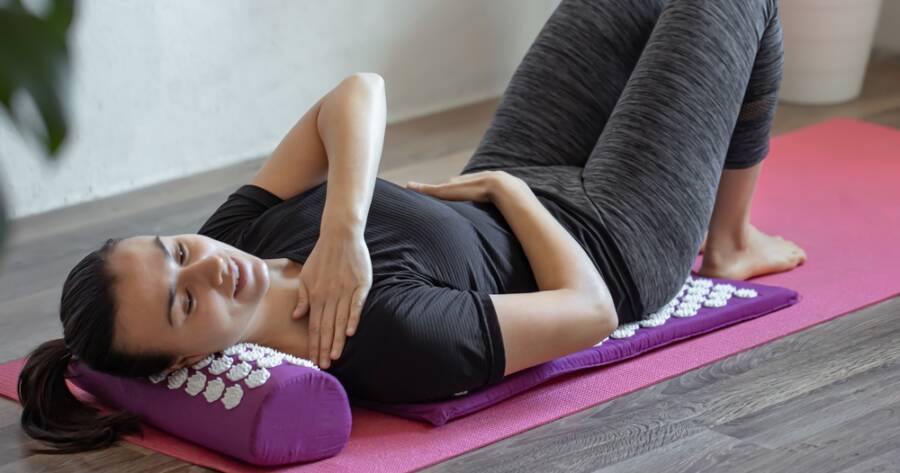
One of the most common ways to use an acupressure mat is by lying on your back. This helps target the upper and lower back, which are often areas where tension builds. You can bend your knees or place a pillow under them to reduce strain on your lower back.
For neck tension, some mats come with a small pillow that supports the curve of your neck. This allows the pressure points to focus on tight areas without forcing your head into an uncomfortable position. You can also roll a towel and place it under your neck if your mat does not include a pillow.
The mat can also be used for your legs and feet. Sitting down and placing your feet on the mat may help relieve tension after standing or walking for long periods. These different positions allow you to target the areas that need the most attention.
Combining the Mat with Relaxation Habits
Using an acupressure mat works best when paired with simple relaxation habits. Try using it in a quiet space where you can focus on your breathing. Slow, steady breaths can help your body relax and make the pressure feel more comfortable.
You can also use the mat as part of your evening routine. Lying on it before bed may help signal your body that it is time to wind down. Some people listen to calm music or guided audio while using the mat to create a more relaxing experience.
Keeping your routine simple helps you stay consistent. Even a short session can be useful if you use it regularly.
What to Expect Over Time
The first few sessions may feel unusual or slightly uncomfortable, but this often improves with regular use. As your body becomes more familiar with the sensation, you may start to notice that it feels more relaxing than intense.
Over time, some people report feeling less tightness in their muscles and a greater sense of ease in their body. The mat does not provide instant results, but it can support gradual improvement when used consistently.
It is important to keep your expectations realistic. The mat is a tool that supports comfort, not a cure for all types of pain. Paying attention to your body and using the mat in a steady way will help you get the most benefit.
Making It Part of Your Daily Routine
To get the most out of an acupressure mat, try to make it part of your regular schedule. Choose a time of day when you can relax without interruption. This might be after work, before bed, or even during a quiet break at home.
Keep the mat in a place where it is easy to access. If it is already set up, you are more likely to use it. Consistency often comes from convenience, so making the mat part of your space can help build the habit.
You do not need long sessions to see results. Even 10 to 20 minutes a day can support relaxation and reduce tension over time.
A Simple Tool for Everyday Relief
Acupressure mats offer a simple way to address daily tension without complex routines or equipment. By starting slowly, choosing comfortable positions, and pairing the mat with calm habits, you can create a routine that supports your body.
The goal is to use the mat regularly and listen to how your body responds. With steady use, it can become a helpful tool for easing tension and creating a more relaxed state at home.